If you have questions the national branch or the contact person in your country will be happy to help you. In cases with no national contacts please contact the EC.
Programs

What is an IPEP? (International Professional Exchange Program)
IPEPs are operated in around 20 countries all over the world, see the list click HERE.
A key activity for CIF is to encourage the formation and operation of International Professional Exchange Programs (IPEPs) in various countries all over the world. See an article on the webpage of the International Federation of Social Workers here.
The IPEPs combine practical and theoretical information about the social and cultural environment of the host country.
An IPEP is the opportunity for professionals of social work, social welfare, and human services field/related fields, young and experienced to visit another country and meet with fellow professionals from around the world.
The length of an IPEP is a minimum of two weeks, and the number of participants is a minimum of three, preferably from different countries.
The IPEP structure has the following main pillars:
- Professional exchange in the IPEP group – each participant brings his/her personal expertise and knowledge
- Introduction to CIF International and its activities around the world
- Orientation to the local and regional cultural-social-political and organisational structure, introduction to the current social services system in the country
- Theoretical and practical experience in observing social workers and other related professionals in well-chosen agencies and organisations. In IPEPs which require local language skills from the participants, the agency experience might be one of direct contact with clients in the participant’s field of expertise. In other IPEPs, without the local language requirement, agency visits are an observation and discussion opportunity with the agency personnel, rather than enabling participants to have direct contact with clients.
- Living in host families
- Social and cultural group activities during the program
The IPEP IS:
- an opportunity to observe, discuss, and, if possible, participate in social work practice;
- an opportunity to share ideas, values and experiences with a multinational group of fellow professionals on similar placements;
- an opportunity to live with local families and find out about their culture and way of life.
The IPEP is NOT:
- a holiday;
- an assessed training course or academic course;
- a wholly “practice-based” experience. Please check the program flyer or contact the national branch directly to get more information about what to expect from agency visits/field placements.

Participants: Who can participate?
- Participants should have an educational background in social work, social welfare, or human services field/related fields, with at least two years of professional experience in these fields.
- Participants have to be proficient in the language of the IPEP program.
This program provides the chance to exchange with professionals around the world throughout your entire professional career.
In 2024, CIF International is conducting a project to assist applicants who need financial support for their participation in one of the International Professional Exchange Programs (IPEPs). Applicants are asked to apply for financial support at the same time as they send in their application to the national branch or contact person in their country. You can find the application form here.
Application form
If you wish to apply for a program, please download the application form below, complete it and send it back to us
Host Family: Be or become one
One of the most important features of any IPEP is Host Family Living.
Volunteer host families provide a home base and home comforts so that alongside the learning the IPEP participant can experience culture, social exchange, relaxation, friendship and fun!
Participants begin to understand the country better through their contact and sharing of day-to-day life with host families. Being a host family is a fascinating way of getting to know somebody - a colleague from another part of the world - sharing cultural differences and making lasting friendships.
For our IPEPs in the countries with a program we welcome volunteer families for our international guests. All settings are welcome. With or without children, young or retired, single or couples.
Participants should have a bedroom to themselves and whenever possible, be given a house key so that they can come and go in their own time.
Host families are asked to provide breakfast and an evening meal.
Family life should continue as normal. Host families should be sensitive and open to the differences in cultures. Particularly in the beginning, participants may need to practice their English language skills. Be sure to check that you both fully understand what is being said to each other to avoid misunderstanding. English is not the main language in most CIF countries.
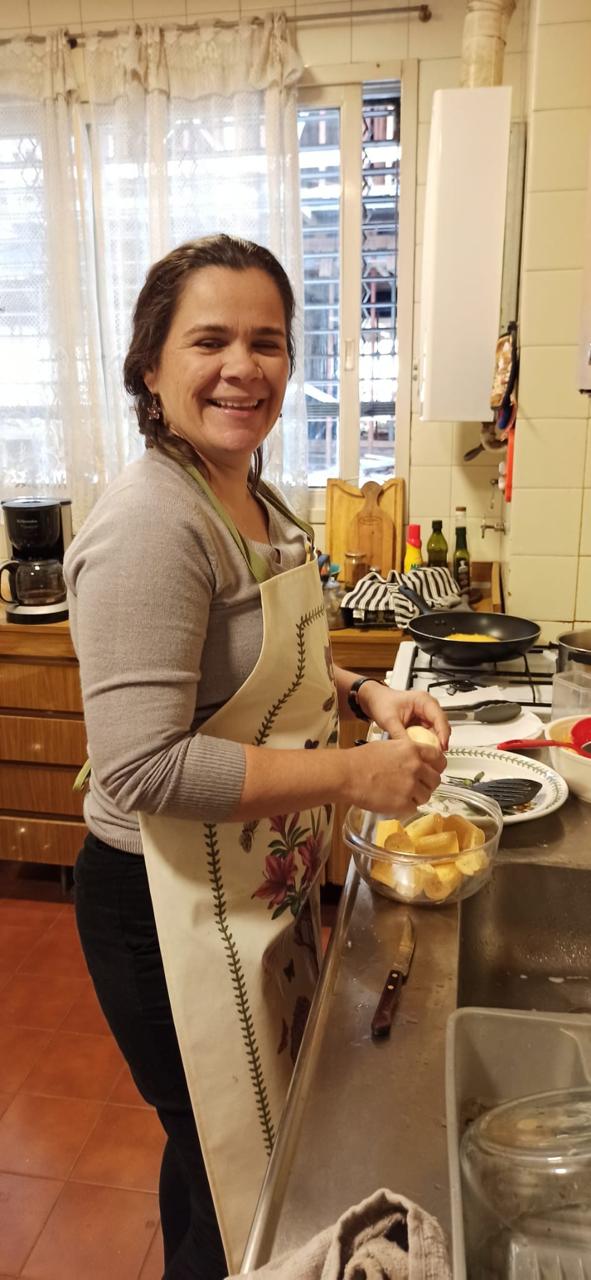
An awareness and respect for other cultural behaviours and religious customs is essential in order to fully understand and respond appropriately to participants’ needs. Communication with the participant by email before the program is helpful. It is also important to encourage participants to express their views, discuss expectations and establish a mutually acceptable code of conduct.
Please contact the national branch of your country and ask for a contact of the person in charge of the program/host families.
It will enrich your life to get to know social workers from around the world.
Being a host family is volunteer work. The experience of having an international guest is however priceless.
Please contact the branch in your country if you are interested.
Host family contact
Host Agencies: Be or become one
For our IPEPs in the countries with a program we are happy to find agencies that are welcoming our guests in social work, social welfare or human services field/related fields. Please contact the national branch of your country and ask for a contact of the person in charge for the program.
It will enrich your professional life to get to know social workers from around the world. Exchange ideas and best practices. Get involved in fruitful discussions with our guests and the hosting branch colleagues. Create formal and informal networks with international colleagues.
You should be able to provide a meeting (agency visit) or even the opportunity to be in your place for a longer time during the program (field placement).
Agencies are asked to provide an overview of the structures, goals, target groups, methods, services and ethics of their organisation. In addition, giving a bigger picture about similar organisations and services in the country will be helpful for participants to understand the situation in the field.
Agencies should involve varied professionals in responding to the participant(s) if possible, taking into account that this is also a mutual learning possibility. The actual working process of the agency should be presented directly to the participants where possible (taking into consideration relevant consent issues, clients’ rights and work ethics).
Neither agencies nor participants are paid for the placements. The organising national branch is responsible for hosting and for food for the participants.
You will also be able to let your staff enroll in an International Professional Exchange Program, which will be beneficial to your organisation.
CIF participants bring back knowledge and experience of international social work practice through exchange with other participants on the program, as well more detailed knowledge of work practices – and social, cultural and family life - in the host country.
Most CIF participants return from their chosen program with a new energy and enthusiasm. This can be sustaining and inspiring to colleagues they work with.
Host agencies contact
Whom can I ask?
Experiences from participants

IPEP Switzerland 2025
by Mariela Colmenero, Argentina

IPEP Greece 2025
by Malena Dondo, Argentina
.svg.png)
IPEP Germany 2024
by Maria Angeles de la Vega

IPEP Sweden 2024
by Amelia from Spain and Nihan from Turkey

IPEP Argentina 2022
by Ana Chavez Madrigal, Costa Rica.

IPEP Austria 2022
by Agustina Luque, Argentina
IPEP Greece 2022
by Lars-Christian Christiansen, Germany.

IPEP France 2022
by Sunniva Ekbom, Sweden
IPEP Greece 2019
by Judy Shlasky, Israel